 NaturalRewrite
How to Bypass GPT Detection in 2026 (5 Methods)
GPT detection is no longer something you only run into in academic settings. Publishers, marketing agencies, and even some employers now run AI content checks as a standard step. Turnitin rolled out AI detection in April 2023. GPTZero now scans billions of words each month. Originality.ai, Copyleaks, and ZeroGPT have all added AI flagging in the past two years, and the tools keep getting more accurate.
The frustrating part: these tools don't flag content for being wrong, low-quality, or unhelpful. They flag it for being statistically predictable. Text that's accurate, well-reasoned, and genuinely useful can still get caught because of how AI models construct sentences.
Understanding GPT bypass — what actually works and why — is the practical question. Here are 5 methods, from fastest to most hands-on.
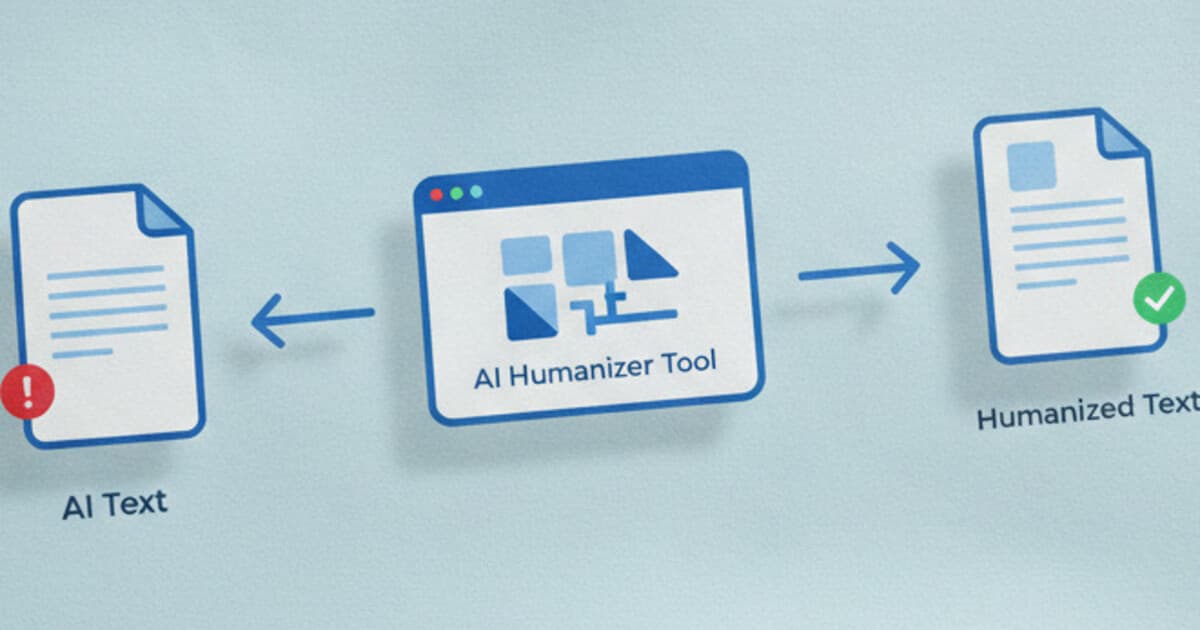
The most reliable way to bypass GPT detection is to run your text through an AI humanizer that rewrites at the sentence level rather than just swapping vocabulary. Detectors like GPTZero and Turnitin measure perplexity (word-choice predictability) and burstiness (sentence-length variation). Shifting both signals into human ranges drops detection scores significantly.
How GPT Detection Works
GPT detectors don't read your content for quality. They run statistical analysis on your word sequences and sentence patterns.
GPT detectors like GPTZero, Turnitin, Originality.ai, and Copyleaks identify AI-generated text using two primary signals: perplexity and burstiness. Perplexity measures how predictable word choices are at each step in a sentence. Large language models like GPT-4, Claude, and Gemini generate text by selecting high-probability tokens, which produces consistently low perplexity scores throughout a passage. Human writers make unpredictable word choices shaped by personal voice, field-specific knowledge, and genuine ideas — which raises perplexity naturally. Burstiness measures variation in sentence length and complexity. Human writing mixes 6-word punchy sentences with 30-word analytical ones, while AI output tends to cluster sentences within a narrow length range. GPTZero, developed by Princeton student Edward Tian and launched publicly in January 2023, uses these two signals to output an overall AI probability score with sentence-level flagging. Turnitin's AI detector, launched April 2023 and trained on millions of academic papers, claims over 98% accuracy at low false positive rates. Originality.ai reports roughly 90% accuracy on long-form content, with accuracy dropping on passages under 100 words. Copyleaks reports 99.1% accuracy across 15 languages, though independent tests on humanized text consistently show lower rates.
Most tools layer additional checks on top: sentence structure uniformity, n-gram probability distributions, stylistic signature detection. The point is that they're measuring math, not meaning. That's what makes the signals shiftable.
Why Simple Rewrites Don't Beat the Detectors
The first instinct most people have is QuillBot or a basic paraphraser. It usually doesn't move the score much.
Synonym substitution changes individual words but leaves sentence structure intact. If you swap "assist" for "help" and "commence" for "begin" throughout a paragraph, sentence lengths stay the same and the probability distribution across the full sequence barely shifts. GPTZero and Turnitin score at the sequence level, so surface-level vocabulary changes don't disrupt the underlying pattern.
Manual paraphrasing does better — but only when you also vary sentence length at the same time. Rewriting content while keeping a flat rhythm (every sentence 15-20 words long) won't move burstiness scores. Both signals have to shift together, and doing that consistently across a 1,000-word document takes real effort.
For more on how detection signals work across different tools, see how AI detectors work.
5 Methods to Bypass GPT Detection
Method 1: Use an AI Humanizer (Fastest)
A proper AI humanizer rewrites text at the structural level — varying sentence length, adjusting word-choice distributions, and breaking predictable clause patterns. This targets both perplexity and burstiness simultaneously.
NaturalRewrite uses a multi-model pipeline that processes your AI text and outputs a restructured version. You paste the content, pick a tone mode, and get output designed to pass GPTZero, Turnitin, Originality.ai, Copyleaks, ZeroGPT, and Sapling. Academic tone mode works best for papers and formal essays. Standard and Casual tone modes handle blog content, reports, and general writing.
Free accounts get 5 humanizations per day at 300 words per run. No credit card required to start.
Method 2: Vary Sentence Length Manually
If you're editing by hand, this is the highest-impact change you can make.
AI outputs typically cluster sentence lengths between 15 and 22 words. Human writing goes from 5 to 40 and back. Go through your draft and break long sentences into two. Merge short adjacent ones. Drop a one-sentence line mid-paragraph. This directly cranks up the burstiness score and takes 10-15 minutes on a 500-word draft.
This won't fix perplexity on its own, but it's a meaningful improvement when combined with any other method on this list.
Method 3: Inject Specific Examples and Opinions
AI detectors can't measure authenticity directly, but specificity lowers perplexity. When you add content only you could write — a concrete example from your experience, a named source, a counterargument backed by data — the word choices become statistically unpredictable.
"Research suggests..." gets flagged. "A 2023 Stanford study by Dotan et al. found..." doesn't. The difference is specificity, not AI status. One well-chosen example per 300 words makes a noticeable difference.
Method 4: Cut Predictable Transition Phrases
AI writing leans on transitions: "Furthermore," "Additionally," "In conclusion," "It is worth noting that." These phrases appear at statistically higher rates in AI text and get picked up by pattern-matching layers in detectors.
Remove them. Start paragraphs mid-thought. Finish sections without restating what you just said. The writing gets tighter and less predictable at the same time. This pass takes about 5 minutes on a full essay and costs nothing.
Method 5: Verify Before You Submit
Running a humanizer and submitting immediately skips the most important step. A quick detection check after humanizing tells you whether the score actually dropped and which sentences are still flagged.
NaturalRewrite has a built-in AI detection checker included in the same workflow. Free accounts get 3 checks per day. It runs against multiple detection models at once — you see your exposure across GPTZero, Turnitin, Originality.ai, and others in one pass.
How to Bypass GPT Detection with NaturalRewrite
The workflow runs in 3 steps.
Step 1: Paste your text. NaturalRewrite handles up to 300 words per run on the free plan, 1,500 on Starter ($7/month), 3,000 on Pro ($19/month), and 5,000 on Unlimited ($39/month). For documents longer than your limit, split them into sections.
Step 2: Choose your tone mode. Academic for papers and essays. Standard for general-purpose content. Casual for blog posts and conversational writing. The tone mode shapes which burstiness patterns the rewriter targets, so picking the right one for your content type actually matters.
Step 3: Run the detection check. After humanizing, the built-in checker shows your current score before you submit. If specific sentences still flag, run them through a second time on a different tone mode. Academic and Standard produce different perplexity patterns, so switching often clears the remaining flags.
One thing to know: NaturalRewrite rewrites existing text. It can't generate content from scratch, and it doesn't accept file uploads — paste your draft into the editor and work from there.
What Makes GPT Bypass Harder
Some content passes on the first humanization run. Some takes two or three passes. A few factors that push difficulty up:
Heavily templated source text. Prompting for a "5-paragraph essay with an introduction, 3 body paragraphs, and a conclusion" produces extremely predictable structure. The burstiness score starts low before you've touched it. Prompts with more specificity and less rigid structure give you better raw material to work with.
Short documents. Detectors are less reliable below 100 words because there isn't enough data to build a solid statistical profile. Anything over 300 words is where most detection tools operate with the most confidence — and where humanization makes the clearest difference.
Technical or scientific vocabulary. Precise terminology locks in certain word choices, which constrains perplexity variance. Academic tone mode handles this better because it's calibrated for formal writing that requires specific vocabulary while still shifting the surrounding structure.
For a broader look at detection accuracy numbers across major tools, see how accurate are AI detectors.
Try it yourself: paste your text into the free AI humanizer — 5 humanizations a day, no credit card.
Frequently Asked Questions
What is GPT bypass?
GPT bypass refers to rewriting AI-generated text so it passes detectors like GPTZero, Turnitin, Originality.ai, and Copyleaks. These tools measure perplexity (word-choice predictability) and burstiness (sentence-length variation). Bypassing detection means shifting both signals into the range that reads as human-written. AI humanizers handle this automatically. Manual editing can achieve similar results with more time investment.
Does NaturalRewrite work against all major AI detectors?
NaturalRewrite's pipeline targets the perplexity and burstiness signals used by GPTZero, Turnitin, Originality.ai, Copyleaks, ZeroGPT, and Sapling. The built-in detection checker verifies results across multiple models after humanizing. No tool guarantees 100% undetectable output since detectors update continuously, but NaturalRewrite is designed to pass the major detection tools in use today.
Can I bypass GPT detection for free?
Yes. NaturalRewrite's free plan gives you 5 humanizations per day (300 words per run) and 3 detection checks per day with no credit card required. A 500-word essay takes 2 runs. For longer documents or higher daily volumes, Starter ($7/month) gives you 1,500 words per run and 30 humanizations per day.
Why does my text still get flagged after paraphrasing?
Standard paraphrasers swap vocabulary but don't change sentence structure. AI detectors score at the sequence level, so surface-level word substitution leaves the statistical fingerprint mostly intact. For detection scores to drop, both perplexity and burstiness need to shift — which requires structural rewriting, not synonym replacement.
Is bypassing GPT detection against academic policy?
Academic AI policies vary by institution and course. Some schools prohibit AI use entirely; others permit AI-assisted writing with disclosure. Understanding your institution's specific policy before using any AI tool is your responsibility. This article covers the technical methods.
If your text got flagged and you need to clear a detection score before submitting, paste it into NaturalRewrite, pick your tone mode, and run the built-in checker before you send. Free accounts cover 300 words per run with 5 daily humanizations — no card required. Start at naturalrewrite.com.